Advanced No-Cut Kidney Stone Removal by Dr. Pawan K. Gupta
Kidney stones can cause severe pain, recurrent urinary infections, blood in urine and obstruction of the urinary tract. Fortunately, advances in endourology have made kidney stone treatment safer, more effective and far less invasive than traditional surgery. One of the most significant advancements in this field is RIRS (Retrograde Intrarenal Surgery), a modern laser-assisted procedure that removes kidney stones through the body’s natural urinary passage without making any incision or artificial hole on the body & kidney of the patient.

Experience: 45+
At R P Stone Clinic in Panipat, Dr. Pawan K. Gupta has been performing RIRS surgery since 1998 and has successfully treated thousands of kidney stone patients from across India and abroad. With decades of experience, state-of-the-art equipment and a commitment to minimally invasive treatment, the clinic has become a trusted destination for patients seeking advanced kidney stone treatment in Panipat, Haryana.
RIRS (Retrograde Intrarenal Surgery) is an advanced endoscopic procedure used for the removal of kidney stones with the help of flexible ureteroscopes, both fiberoptic and digital (chip-on-the-tip), holmium laser, thulium fiber laser access sheaths, tipless baskets, and wires etc., through natural urinary passages.
Unlike conventional surgery, RIRS does not require any incision or puncture or artificial hole on the body. The procedure allows the surgeon to directly reach the kidney, visualize the stone, fragment it using laser energy and remove the stone fragments safely.
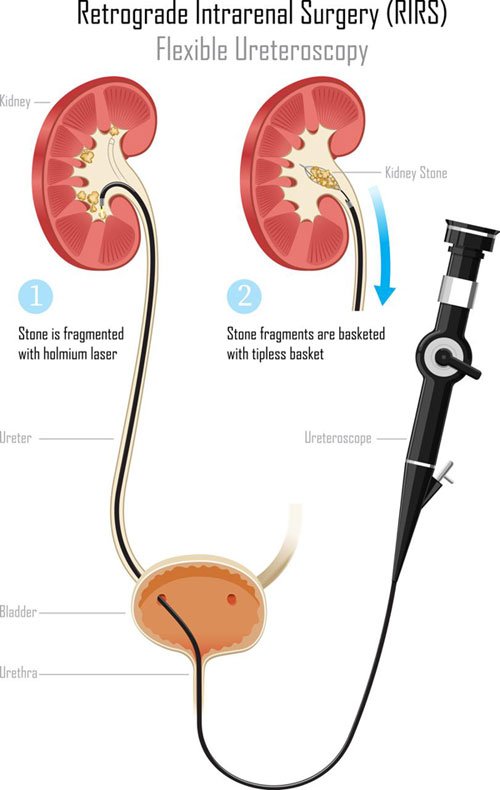
Kidney stones are hard deposits of minerals and salts that form inside the kidneys. While mostly small stones may pass naturally through the urine, larger stones or stones located in certain parts of the kidney or urinary tract may not pass on their own.
These stones can cause:
If a kidney stone is too large to pass naturally, causes constant problems, or is likely to damage the kidney, your doctor may recommend surgical removal of the Kidney Stones. Removal of Kidney stones may require URS, PCNL, RIRS, or sometimes ESWL.
RIRS is widely regarded as one of the least invasive methods for kidney stone removal.
Benefits of RIRS surgery includes:
Because of these advantages, RIRS has become one of the preferred treatment options for kidney stone removal worldwide.
One of the biggest advantages of RIRS surgery is that it is performed entirely through the natural urinary passage.
As there is:
Patients usually experience less discomfort and recover much faster compared to many traditional kidney stone procedures. Many patients are able to return to routine activities within a short period after surgery.
RIRS is a safe and effective treatment for many patients with kidney stones. Urologist may recommend RIRS based on the size, location and type of stone, as well as your overall health.
RIRS may be recommended for:
Note: RIRS is not the best treatment for every kidney stone. Very large stones, complex stone burdens may be better treated with other procedures, such as PCNL. Your urologist will recommend the most appropriate treatment after a detailed evaluation.
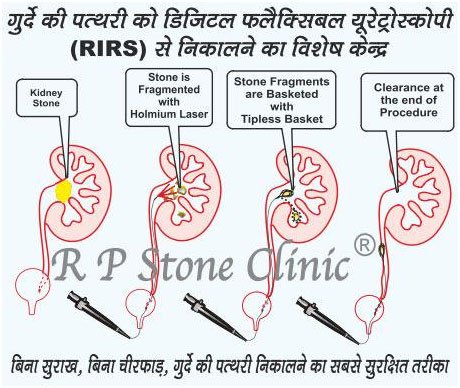
RIRS is a minimally invasive procedure for kidney stone removal that uses advanced flexible ureteroscopes and Holmium laser/ TFL. Performed through the natural urinary passage without any incision, it offers effective stone treatment with faster recovery and minimal discomfort.
The RIRS procedure consists of the following steps:
Since the procedure is performed through natural passages, there is no surgical cut or hole made in the kidney.
RIRS surgery is a minimally invasive procedure that can be used to treat a wide range of kidney stone cases. It is particularly beneficial for certain patients and clinical situations where a no-cut, no-hole approach offers significant advantages. Following a detailed evaluation, Urologist can determine whether RIRS is the most appropriate treatment option for you.
RIRS may be particularly beneficial for:
Because RIRS is performed using a flexible ureteroscope through the natural urinary passage, it can be an effective option for treating kidney stones in patients with horseshoe kidneys and other anatomical variations of the urinary tract.
Yes, large kidney stones can be very well treated by RIRS sometimes in stages with advancements in:
RIRS can now be used for many large kidney stones.
The suitability of RIRS depends on factors such as:
A detailed evaluation by Dr. Pawan K. Gupta helps determine the most appropriate treatment plan.
The journey of RIRS at R P Stone Clinic started when flexible ureteroscopes did not have deflection mechanisms.
In 1991, Dr. Pawan K. Gupta first acquired a flexible ureteroscope imported from Germany. At that time, the technology was primitive compared to modern instruments and had limited functionality.
The real breakthrough came in 1998 when Dr. Gupta actively started using flexible ureteroscopy for kidney stone treatment at R P Stone Clinic, Panipat.
The same year, he organized a workshop on rigid and flexible ureteroscopy under the aegis of the North Zone Chapter of the Urological Society of India.
The workshop featured internationally renowned experts including:
For the first time in India, the use of a flexible ureteroscope for kidney stone treatment was demonstrated during this workshop.
Dr. Pawan Kumar Gupta organized a workshop at RP Stone Clinic Pvt. Ltd. on 12th and 13th December, 1998 under the aegis of North Zone chapter of Urological Society of India where flexible ureteroscopy and holmium laser lithotripsy, commonly called RIRS today, was introduced.
In 2011, Urological Society of India organized a 2 day workshop on RIRS at RP Stone Clinic, Panipat, with Dr. Pawan K. Gupta as the Organizing Secretary.
Highlights of the workshop included:
Another major workshop followed in 2012.
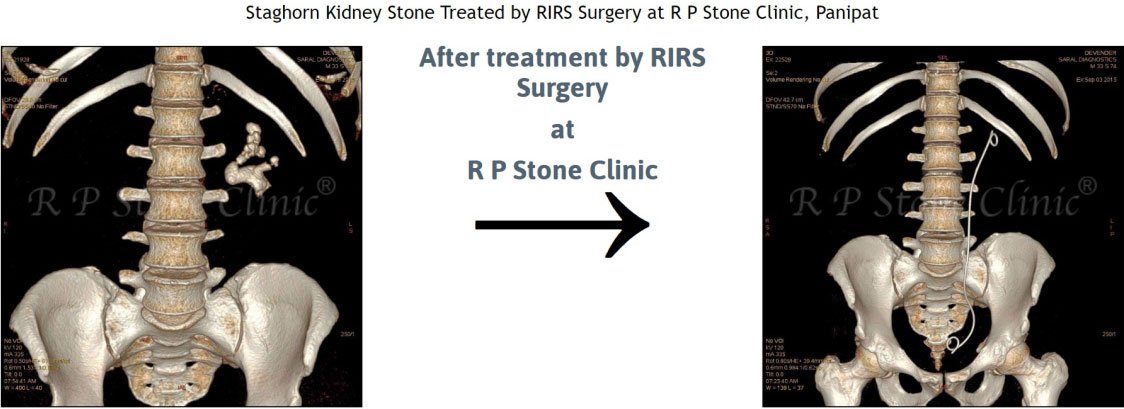
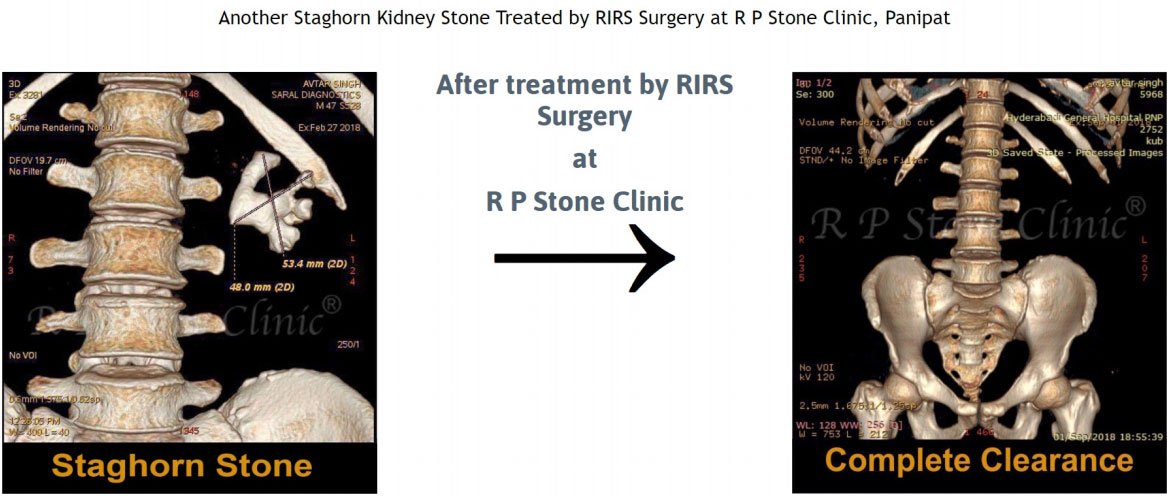
Since then, regular RIRS training programs have been conducted at the clinic, helping train urologists in advanced endourological techniques under Cook Vista organized by Cook Medical. With the result, today even staghorn stones are being removed by RIRS surgery at our kidney stone hospital.
Since 1998, Dr. Pawan K. Gupta has been regularly performing RIRS surgery at R P Stone Clinic.
Experience highlights
The clinic is equipped with a complete range of endourological equipment for RIRS surgeries, including:
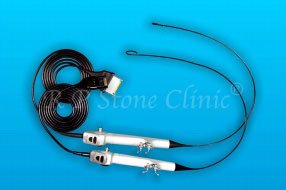
Digital (Chip on the Tip) Flexible Ureteroscopes at R P Stone Clinic, Panipat
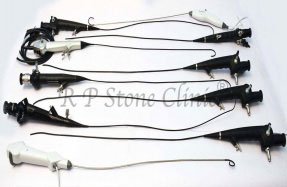
Digital (Chip on the Tip) and Fiberoptic Flexbile Ureteroscopes available at R P Stone Clinic, Panipat
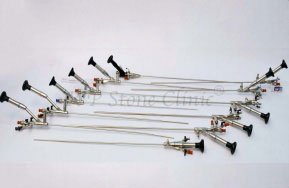
Numerous Semirigid Ureterorenoscopes available at R P Stone Clinic, Panipat
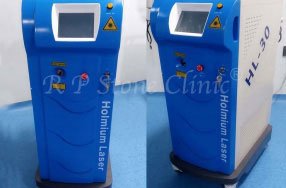
Holmium Lasers at R P Stone Clinic, Panipat
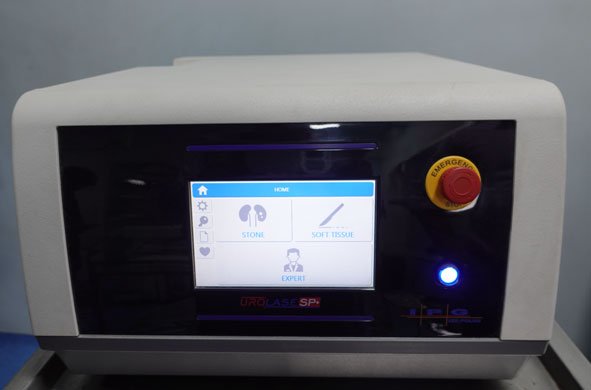
Thulim Fiber Laser
Single use Digital Flexible Ureterscope Flex XC1, Karl Storz, Germany.
Patients Choose R P Stone Clinic Because Of:
If you are looking for advanced RIRS surgery, laser kidney stone treatment, kidney stone removal without surgery or expert care for complex kidney stones, consult Dr. Pawan K. Gupta at R P Stone Clinic, Panipat, Haryana.
With extensive experience, advanced procedure and a long-standing commitment to innovation in kidney stone treatment, the clinic continues to provide world-class care to patients from across India and abroad.
Seeking for the most advanced kidney stone treatment in Panipat? Visit R P Stone Clinic, Panipat, Haryana, a pioneer centre for RIRS surgery in India.
Is RIRS surgery painful?
RIRS is performed under anaesthesia, so patients do not feel pain during the procedure. After surgery, mild discomfort or burning during urination or blood in urine may occur if D-J stent is in place.
How long does it take to recover after RIRS surgery?
Recovery after RIRS surgery is generally quick. Most patients can return home within 1-2 days and many are able to resume their normal daily activities within a few days. Recovery time may vary depending on the size and number of kidney stones, the complexity of the procedure and the patient’s overall health.
Is R P Stone Clinic empanelled with health insurance companies for cashless kidney stone treatment?
Yes, R P Stone Clinic is empanelled with several leading health insurance companies and TPAs, including
Patients are advised to contact the clinic directly for the latest information regarding empanelment with health insurance companies, cashless treatment facilities and coverage for RIRS surgery and other kidney stone procedures. Read More >>
Where is R P Stone Clinic located?
R P Stone Clinic is conveniently located at SCF – 30 and 31, near Angel Prime Mall, Huda Sector 11, Huda, Panipat, Haryana 132103, India. The clinic is easily accessible for patients from Panipat as well as nearby cities and states. Over the years, R P Stone Clinic has treated kidney stone patients from Aligarh, Ambala, Amritsar, Bathinda, Bhiwani, Chandigarh, Dehradun, Fatehabad, Fazilka, Gannaur, Ghaziabad, Gohana, Gurgaon, Haridwar, Hisar, Hoshiarpur, Jabalpur, Jagadhari, Jammu and Kashmir, Jind, Kaithal, Kapurthala, Karnal, Kurukshetra, Ludhiana, Mohali, Mussoorie, New Delhi, Noida, Panipat, Pathankot, Patiala, Rohtak, Rudrapur, Safidon, Saharanpur, Samalkha, Shamli, Sonipat, Yamunanagar, Haryana and many other parts of India.
What are the qualifications and experience of RIRS kidney stone specialist Dr. Pawan K. Gupta?
Dr. Pawan K. Gupta is one of India’s senior-most kidney stone specialists, with more than 45 years of experience in urology and kidney stone treatment and over 27 years of experience in RIRS (Retrograde Intrarenal Surgery). He holds an M.S. (Surgery) from CMC Ludhiana and a Diploma in Urology from London. Recognized pioneer of RIRS in India, Dr. Gupta has successfully performed thousands of RIRS procedures for patients with simple, complex and recurrent kidney stones. He has also organized and conducted numerous national and international workshops on RIRS, published several research papers in reputed international journals and made significant contributions to research, innovation and the advancement of endourology and minimally invasive kidney stone surgery.
Trusted by renowned insurance companies and healthcare partners across the country.








 SCF – 30 and 31, near Angel Prime Mall, Huda Sector 11, Huda, Panipat, Haryana 132103, India
SCF – 30 and 31, near Angel Prime Mall, Huda Sector 11, Huda, Panipat, Haryana 132103, India.
Timing:Monday - Saturday :
10:00 AM – 7:00 PM
 97291 81174
 8607043191